Pothole Repair in Shreveport, LA
Hot-mix repairs that bond seamlessly to surrounding pavement — saw-cut patches and infrared work, no cold-patch shortcuts.
Get My Free Pothole Estimate (318) 610-7967Pothole Repair in Shreveport, LA
A1 Asphalt Shreveport repairs potholes across Shreveport and the Ark-La-Tex — apartment complexes, retail centers, churches, HOA driveways, and private roads. Most potholes we see aren't really potholes; they're base failures that have eaten through the surface. Throwing cold patch at them is a 30-day fix at best. We diagnose what's happening underneath, saw-cut the failed area, rebuild the base if needed, and patch with hot mix at temperature so the repair bonds and lasts. Call (318) 610-7967 for a free assessment.
Why Potholes Form in Shreveport — and Why They Keep Coming Back
A pothole is the visible end of a longer process. It starts with a small surface crack, usually somewhere water can collect — at a low spot, an edge, or a transition. Water runs into the crack during a storm, soaks the aggregate base underneath, and washes fines out from under the surrounding pavement. The base loses support. The asphalt above it deflects under traffic, the crack widens into a hole, and chunks start breaking off the edges. In freeze-thaw markets, that process is accelerated by ice expansion. In Shreveport's climate, it's driven by sheer rainfall volume and the shrink-swell movement of red-clay subgrade. Either way, the visible hole is just the symptom — the real failure is happening in the base. That's why pothole patches that don't address the base fail again within a few storms, and why properly diagnosing the underlying cause is the first step in a repair that actually lasts.


Request a Pothole Repair Estimate
Limited Slots Available This Month!
Saw-Cut Hot-Mix Patches vs. Cold Patch
Cold patch is bagged asphalt mix designed for emergency repairs in cold weather when hot mix plants are closed. It's gravel-and-binder shoveled into a hole and tamped down. It has its uses — emergency winter pothole work on public roads, for instance — but as a permanent repair on commercial or residential property it's a band-aid that lifts loose within months. Properly done pothole repair is a saw-cut hot-mix patch: we saw-cut the failed area to clean vertical edges and a regular rectangular shape, remove the damaged asphalt, inspect the base and replace aggregate where it's failed, apply tack coat to the cut edges, fill with hot-mix asphalt at delivery temperature, and compact with a plate or roller until the patch is at surrounding elevation and density. The result bonds chemically to the surrounding pavement and outlasts the rest of the surface, not the other way around.
When to Use Infrared Patching Instead
Infrared patching uses a heater panel to bring the existing asphalt around a pothole up to roughly 300°F, then integrates new mix into the heated existing surface for a seamless, joint-free repair. It costs more per patch than a saw-cut, but in two situations it's the right call: first, where aesthetics matter — storefront aprons, church entries, HOA driveways where a rectangular saw-cut joint is visible and distracting — and second, where conventional patches have failed at the perimeter joint and a no-joint repair eliminates the failure mode. Infrared isn't a fix for base failure; if the base is gone, we still excavate and rebuild before applying the infrared finish. But for surface-layer pothole repairs in visible or high-wear locations, it delivers a result that conventional saw-cut work can't match.
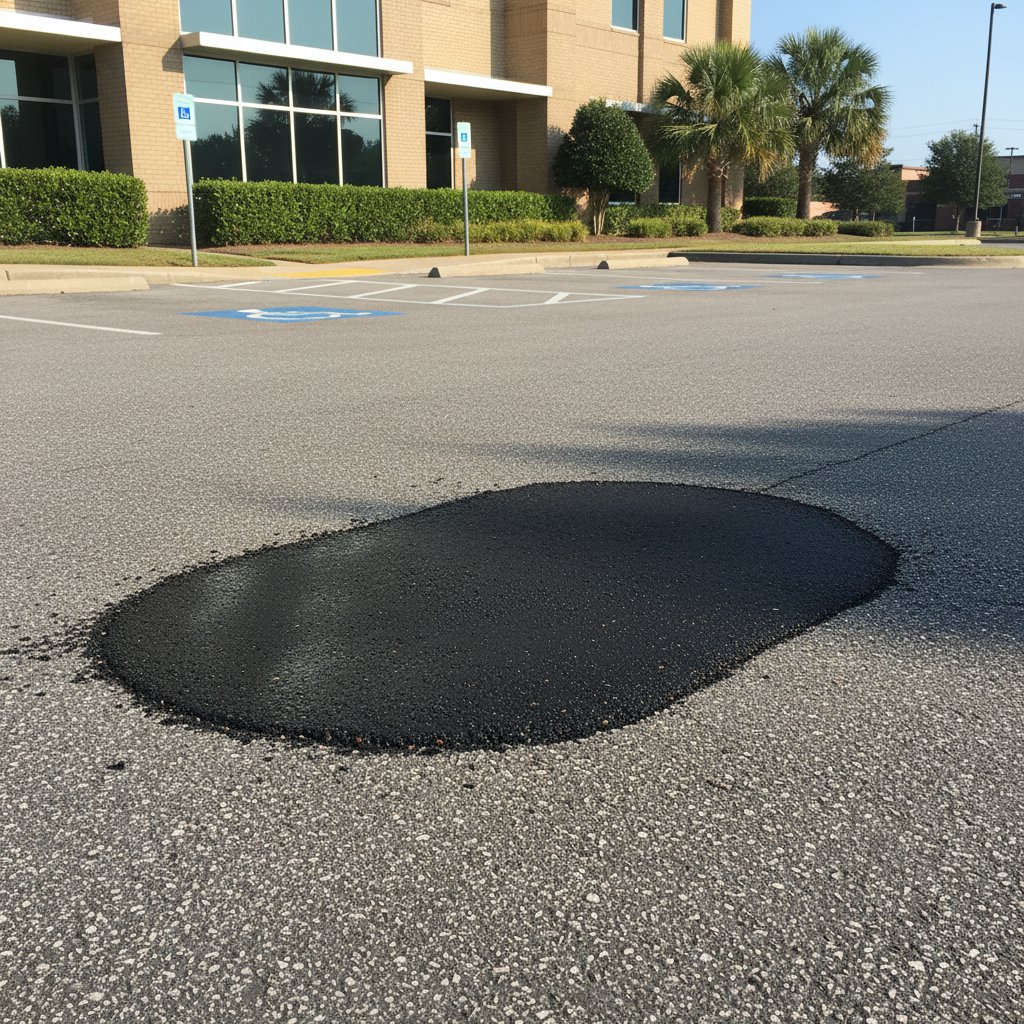
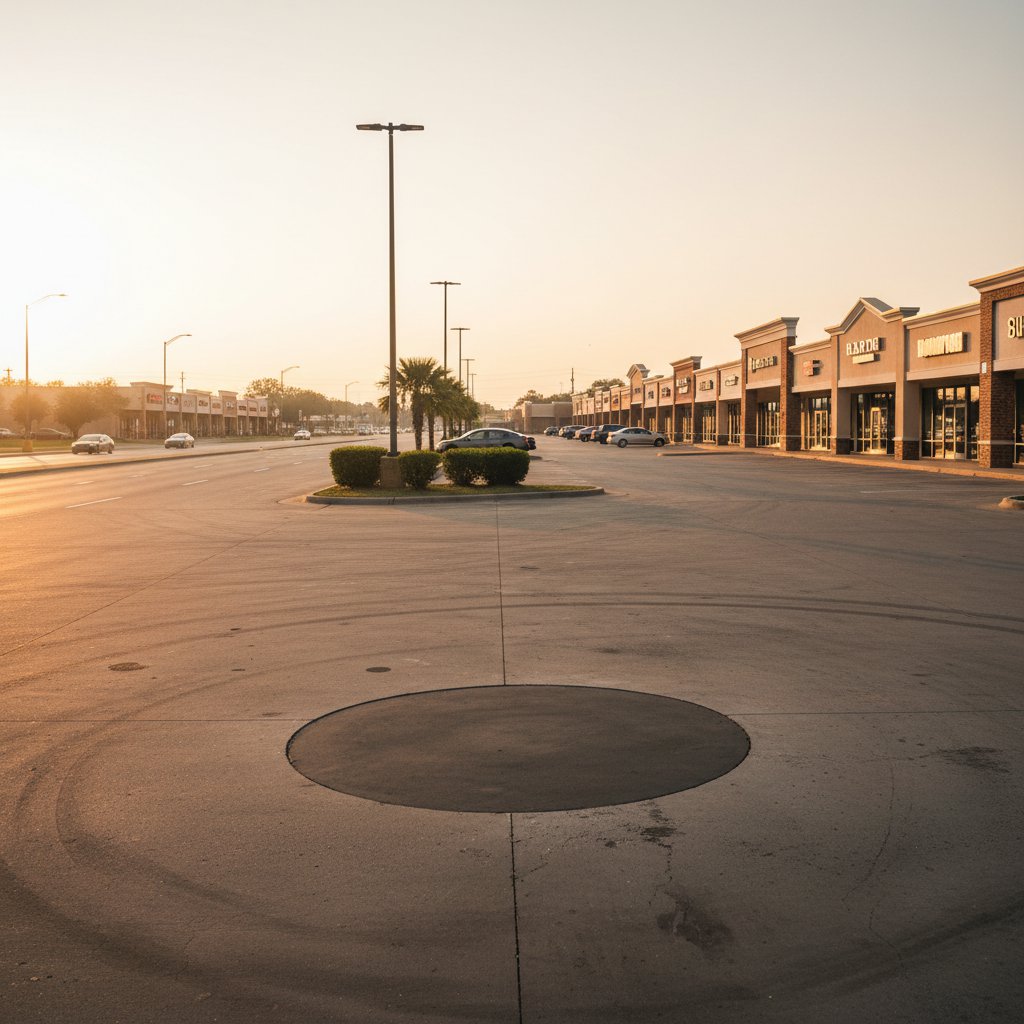
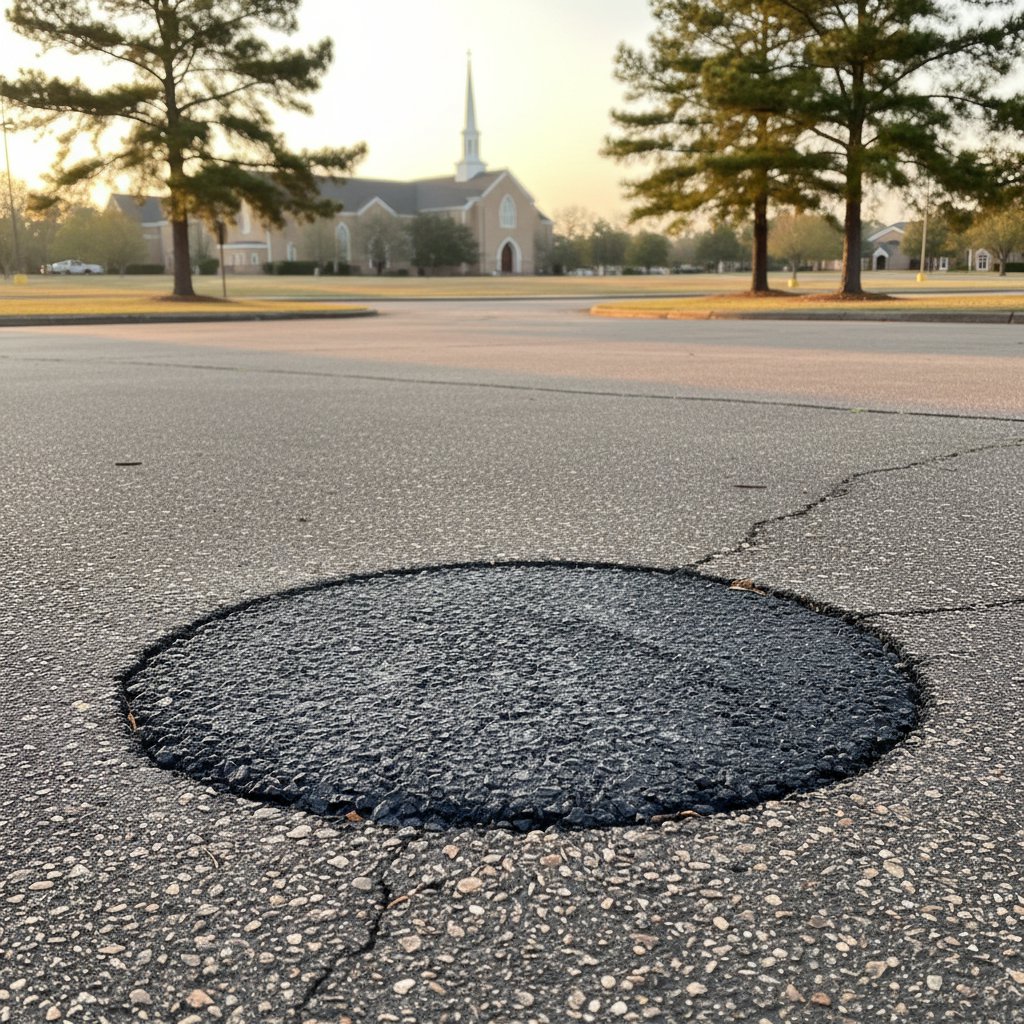
Recent Pothole Repair Projects in Shreveport
Signs Your Pavement Needs Pothole Repair
Catch them when they're small. These are the conditions where a same-week call saves you a same-year disaster.
Visible Hole or Depression
Once aggregate is visible at the bottom of a hole, water is reaching the base. Fix now, before the next thunderstorm enlarges it.
Cracked Ring Around a Spot
A circular crack pattern around a soft spot is a pothole in the making. Patch before the surface breaks through.
Repeated Failures in the Same Spot
When a patch keeps coming loose, the base underneath has failed. Real fix is full-depth excavation and rebuild, not another patch.
Damage at Concrete Transitions
Potholes at sidewalk, curb, or apron joints mean tack coat failed and water got in. Saw-cut and re-bond the joint properly.
How We Repair Potholes
Four steps that turn a recurring problem into a permanent fix.
Diagnose the Base
We probe the hole, inspect base condition, and decide between surface patch, full-depth repair, or infrared treatment.
Saw-Cut and Excavate
Failed area is saw-cut to clean vertical edges, damaged material is removed, and base is rebuilt with aggregate if needed.
Tack Coat and Hot Mix
Cut edges get tack coat, hot mix is placed at temperature, and the patch is compacted to surrounding elevation and density.
Seal and Open to Traffic
Perimeter joint is sealed, patch is allowed to set, and the repair is opened to traffic once it's stable.
What Our Clients Say
"Our driveway off Line Avenue had been graying and raveling for years — sun had cooked the binder out of it. They patched the base where water was pooling near the garage, laid a fresh surface, and sealcoated it the right way. Two summers in and it still looks new."

Ready to Fix Those Potholes?
Get a free assessment from a paving contractor that does the diagnosis before the patch. Saw-cut, hot-mix, and properly bonded — repairs that outlast the surrounding pavement.